Impulse: the courage to become earthly
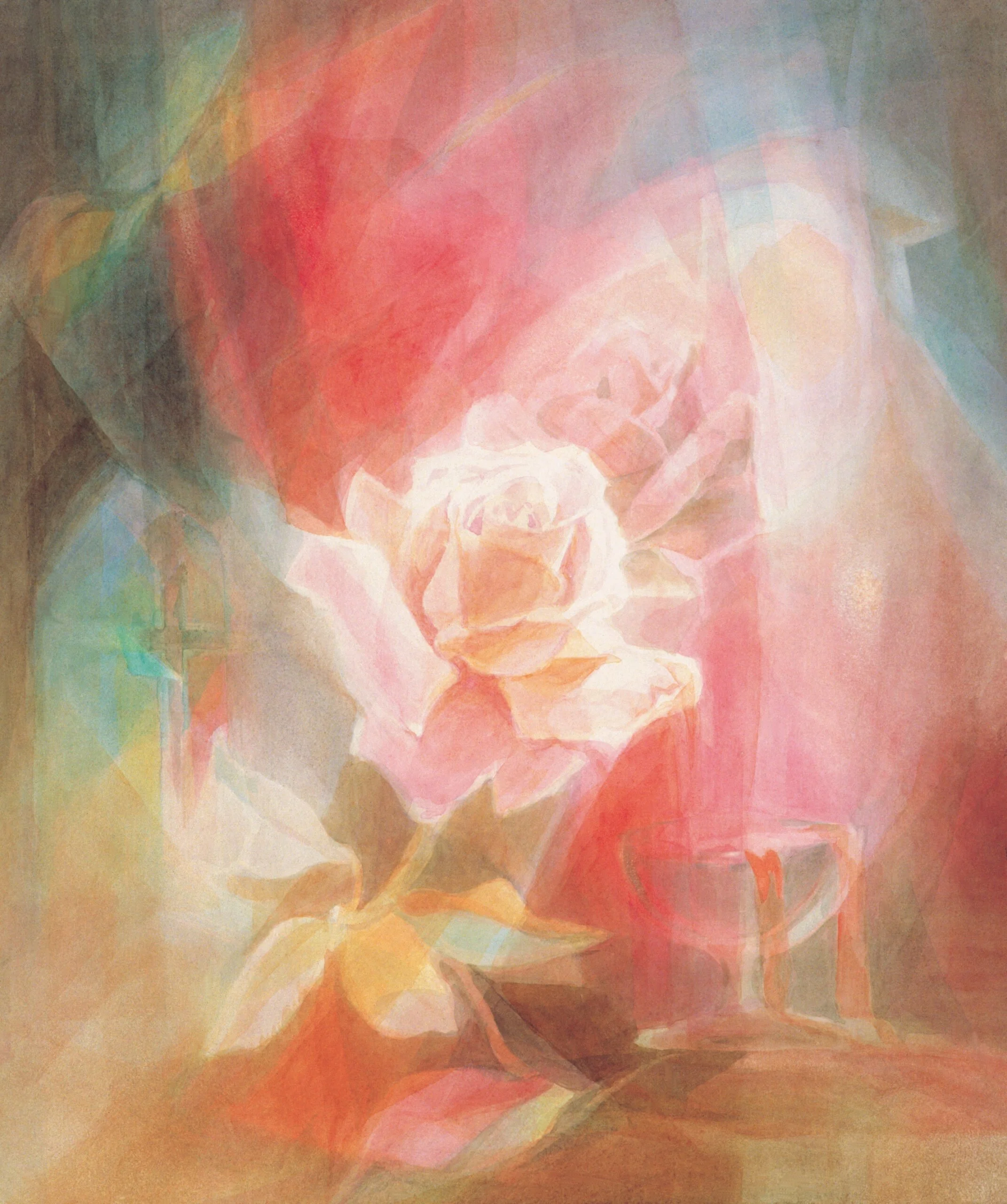
Liane Collot d’Herbois - Rose with chalice - thanks to Walter Schneider from SchneiderEditionen
Michaelmas from impulse to cultural action
Every beginning contains an impulse. Before it becomes an action, it is a movement seeking form; before it becomes visible in the world, it remains a possibility, still surrounded by darkness.
September brings us to this threshold. At Michaelmas, the inward impulse meets a call to conscious action: to receive what is emerging, discern what matters, and give it a place in the world.
Two movements of colour
Two parallel colour movements illuminate this journey. Vermilion → scarlet → light rose follows will moving outward: warmth becomes action and opens into relationship.
Magenta → carmine → crimson → light rose traces an inward impulse gathering depth and becoming embodied.
The movements meet between vermilion and carmine, where outward initiative encounters inward concentration and learns to work with earthly limits. Both may then descend into the fallen colours of autumn: ochre, burnt sienna, deep reds and rich madder browns. Caput mortuum, sepia and dark violet suggest a further, contemplative movement towards the invisible, reaching imaginatively towards ultraviolet.
The two roses carry different qualities: the blush on the cheeks of young people in love, emerging from vermilion, and the healthy glow of a newborn’s face, emerging from magenta.
One speaks of warmth through encounter; the other, of love newly embodied.
Magenta: receiving the impulse
Magenta belongs to the moment before action, when something is felt but has not yet found its form. It evokes Gemüt: the inner region where feeling, thought and disposition meet, allowing an experience to become meaningful.
An impulse needs this inward space. Without receptivity, action risks becoming mere reaction; without a movement towards the world, however, the impulse remains only a possibility.
Vermilion: movement towards the world
Vermilion brings warmth and movement. It is the moment when an inward possibility begins to act. The image of Michael confronting the dragon speaks to this passage. The dragon may be understood as fear, doubt, confusion or haste: forces that can obstruct an emerging intention.
Yet an obstacle is not simply an enemy. Encountering reality reveals what the original impulse could not yet know.
Michael’s sword becomes an image of discernment: the capacity to distinguish what should be carried forward from what must be transformed or left behind.
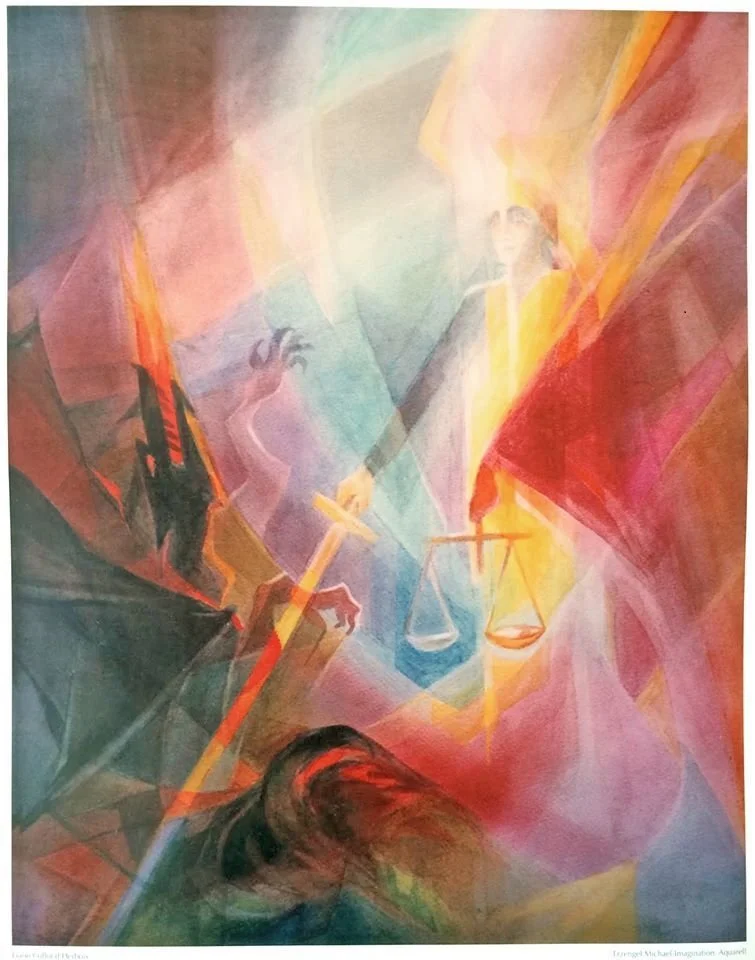
Liane Collot d’Herbois - Archangel Michael - thanks to Walter Schneider from SchneiderEditionen
Scarlet and carmine: cultural action
In scarlet, initiative becomes visible. The impulse takes its first outward form: a word spoken, an image made, an invitation extended, a relationship begun. Action enters the shared world.
Carmine deepens this movement. It brings substance, continuity and commitment. An intention must now find a form that can endure, accepting the limits and conditions of earthly life.
Cultural work begins here: not with the impulse alone, but with the patient act of giving it form.
Autumn: the earthly rainbow
Autumn reveals the richness of colour as it enters matter. Leaves, soil, vineyards and changing skies offer ochres, burnt sienna, deep reds and brown madder tones. The rainbow seems to fall down towards the earth, becoming dense, tangible and particular.
In this descent, colour invites us to recognise the value of what is finite.
Sepia and Caput Mortuum suggest the quieting of visible colour; the passage to a new asent to life with dark violet towards an imagined utraviolet, opens a poetic horizon beyond what the eye can see: what the senses can convey to our souls.
The earthly rainbow is not just a loss of the spiritual impulse, but its transformation into the world of creative and transformative darkness we inhabit.
“Morgenrot”: the light before day
Morgenrot, the red of dawn, names a threshold: the first sign of a light that has not yet fully appeared. It belongs to the moment when the future begins to announce itself.
Magenta receives the possibility; vermilion sets it in motion; scarlet brings it into relationship; carmine sustains it through time. The sequence is a way of contemplating how an impulse can become an action and, eventually, a cultural form.
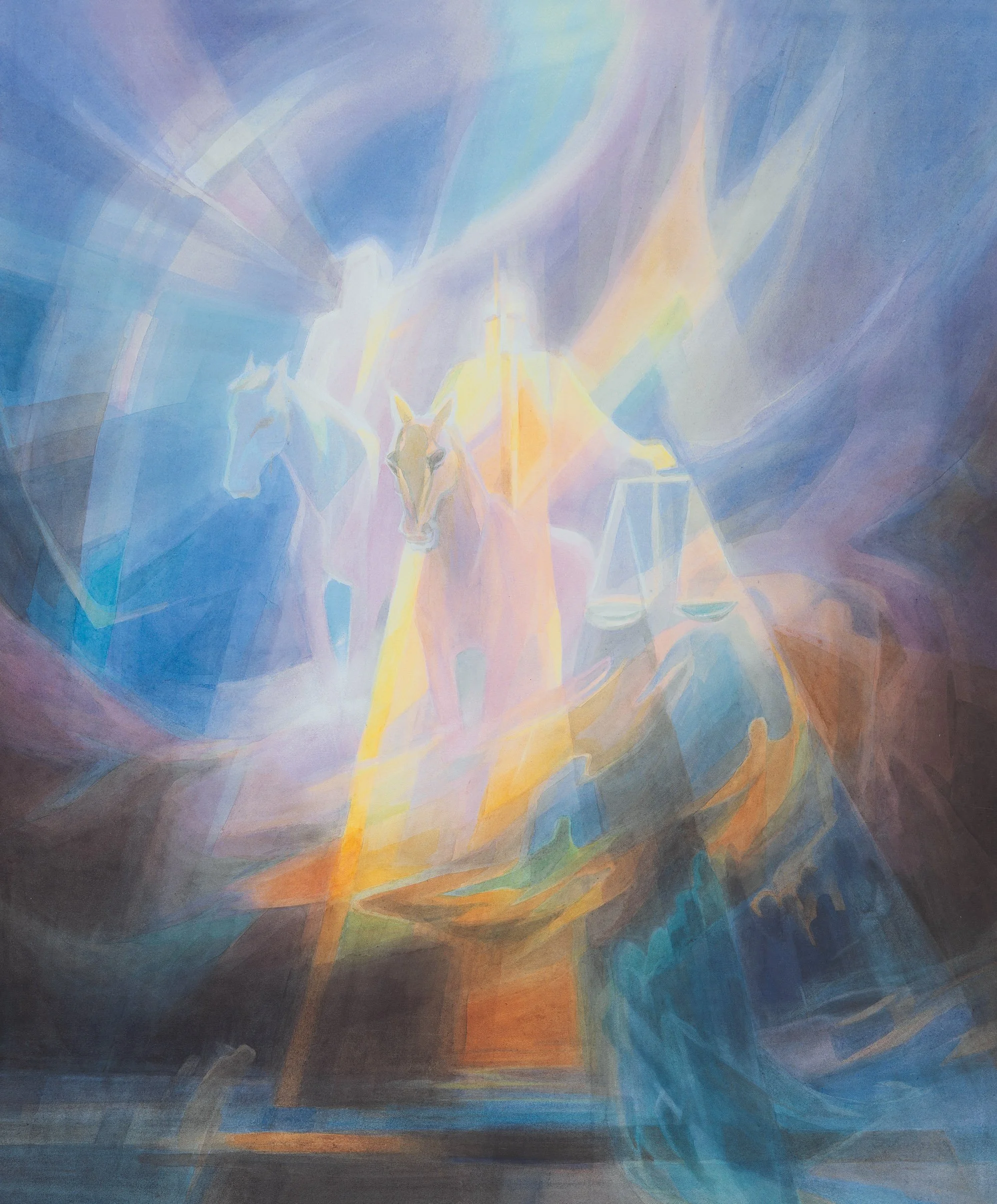
Liane Collot d’Herbois - Two horses - Archangel Michael - thanks to Walter Schneider from SchneiderEditionen
From impulse to culture
Art and cultural life ask us to hold these movements together. We need the openness to receive an impulse, the discernment to meet obstacles, the courage to begin and the will to continue.
Gemüt keeps the work connected to its inner meaning, while earthly reality asks that meaning to become tangible.
Perhaps this is the promise of Michaelmas: that an inward impulse can enter the shared life of the world, remaining faithful to its origin while responding to reality.
What impulse is seeking a form through me?
What must I discern and accept so that it can take root in the world?