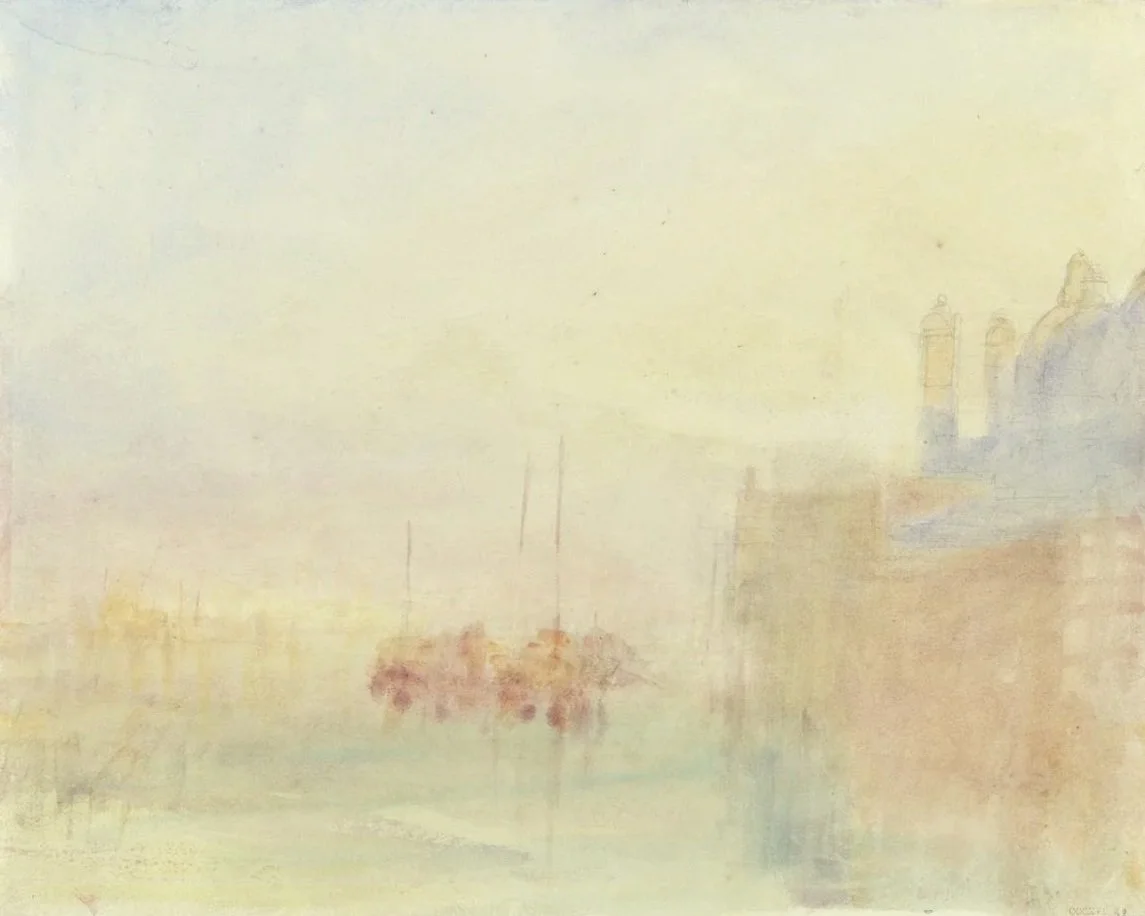
The Movement of Colour
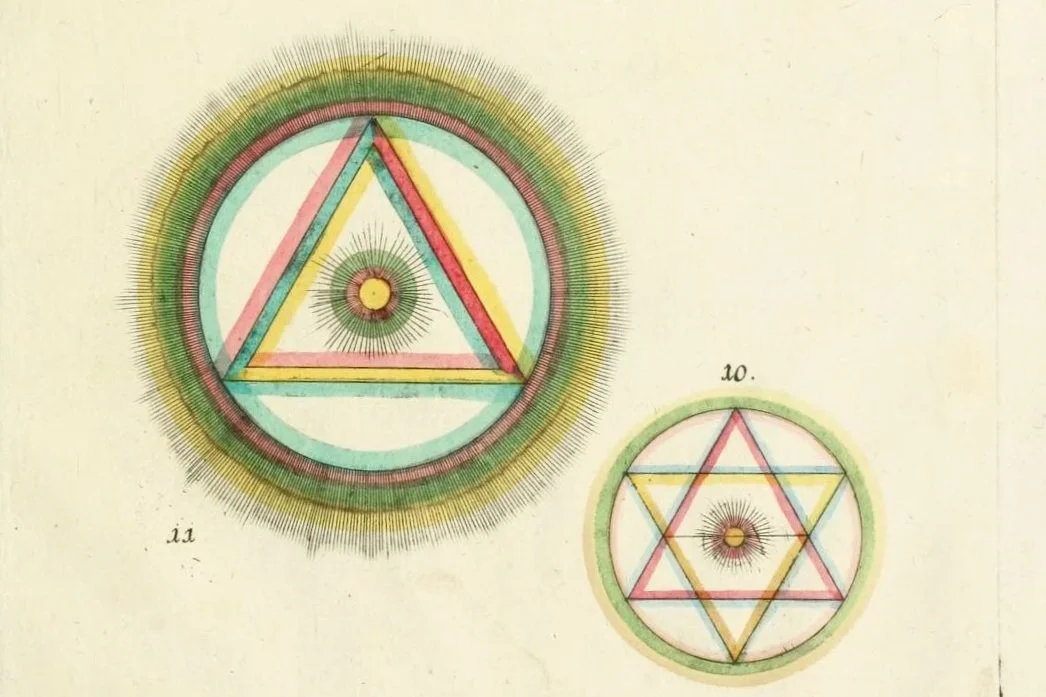
From Opus Mago-Cabalisticum et Theologicum, 1719 - Georg von Welling
Colour is more than a surface.
Before it appears as a visible quality in red, yellow, blue or green, colour can be approached as a movement: something that happens between light and darkness, in the delicate encounter through which colour becomes perceptible.
A sky does not simply possess its blue. A leaf does not permanently contain its green. The blue of the sky changes with the atmosphere, the depth of the horizon and the hour of the day. The green of a leaf changes as the light passes over it, revealing different qualities of the same living form.
Colour arises in relationship: between what illuminates and what receives, what comes into manifestation and what remains concealed.
We might in this way begin to speak of the being of colour.
More than an abstract idea, more than a symbolism to be imposed upon things: a reality we can learn to encounter through a more attentive way of seeing.
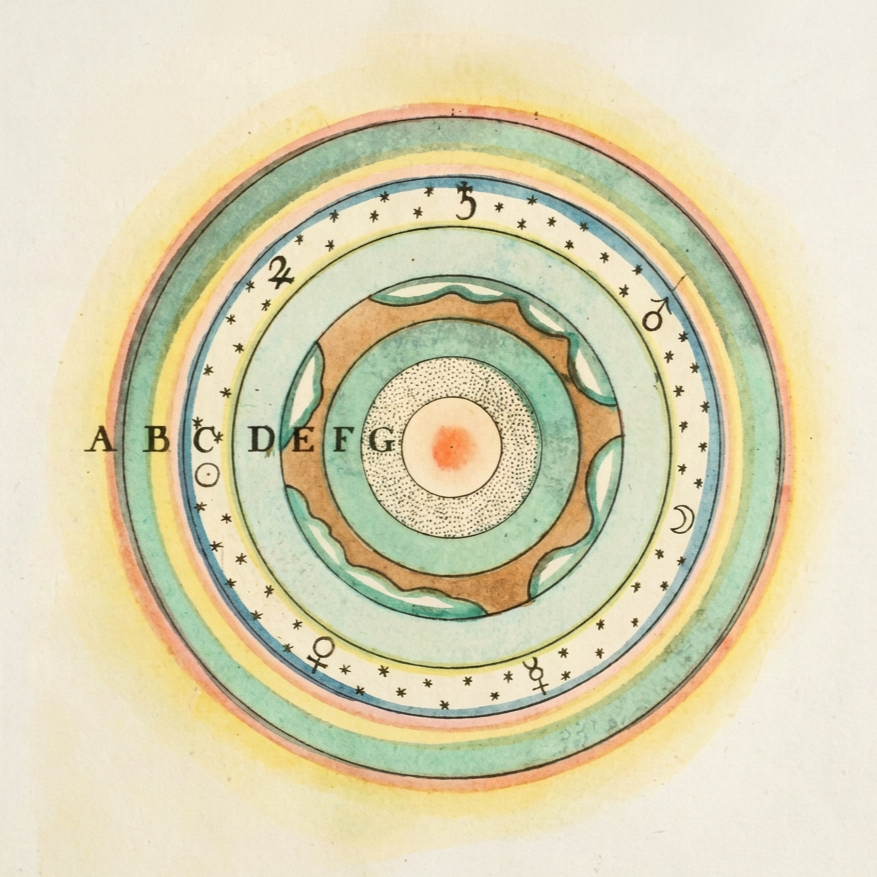
From Opus Mago-Cabalisticum et Theologicum, 1719 - Georg von Welling
Colour is more than a static quality of things: it is a dynamic language of feeling, relationship and contrast. Colours create tensions and harmonies, reveal the character of matter and suggest its transformations.
They can evoke temperament, social identity and vocation; they define, distinguish and blend, composing a living tapestry of human experience.
Throughout history, our imagination has woven narratives around the evolving study of colour: from Aristotle’s account of elemental hues, through Newton’s prism, which divided sunlight into a spectrum of seven colours later associated with the planets and the heptatonic musical scale, to Goethe’s insistence that colour must be observed in the relationship between light and darkness, beginning with phenomena as they appear to life itself.
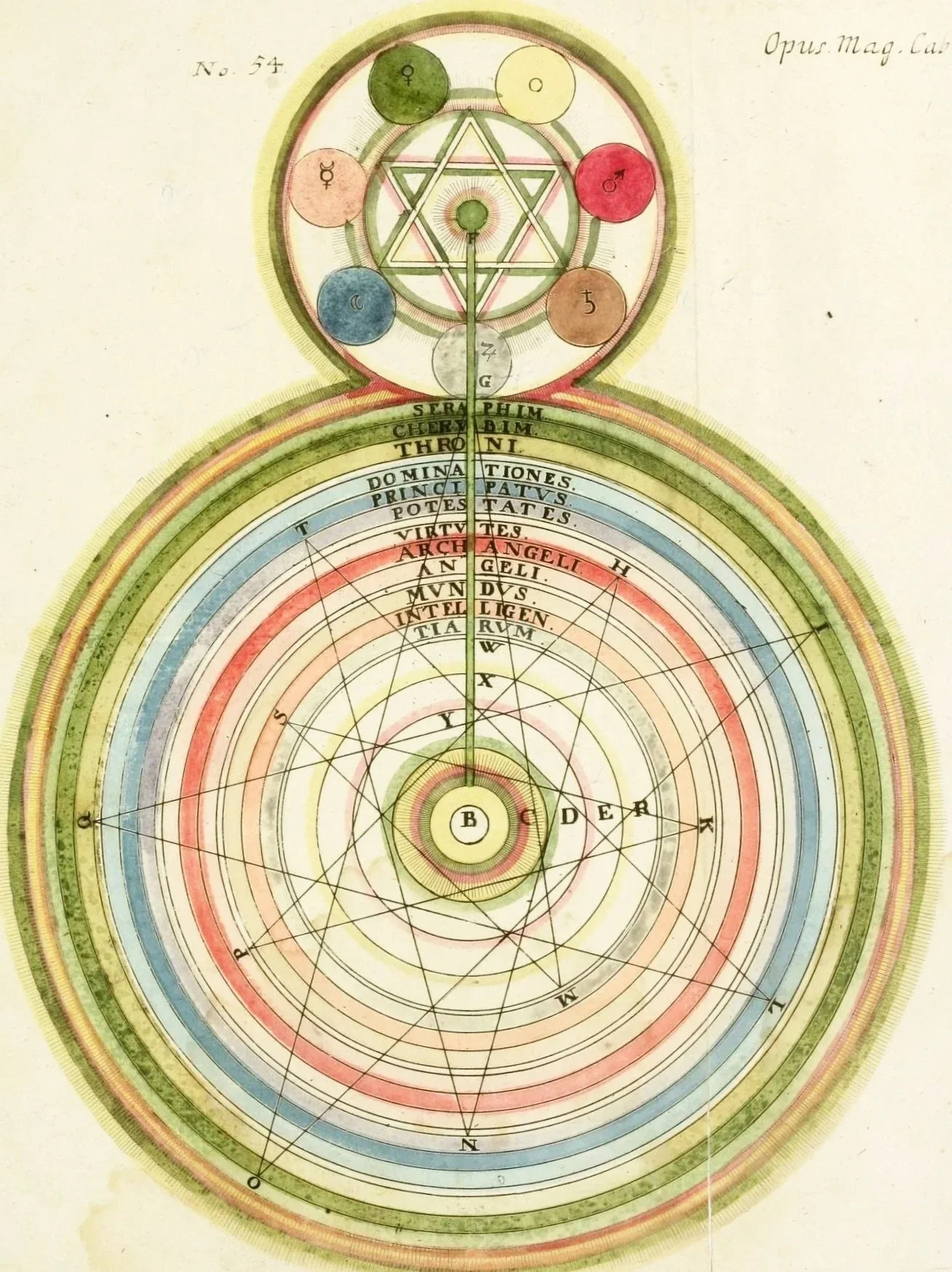
From Opus Mago-Cabalisticum et Theologicum, 1719 - Georg von Welling
Alchemy offers another way of approaching this mystery.
Colour stands at the heart of the opus, the work of transformation:
the nigredo, or blackening, marks the encounter with darkness and the dissolution of what has become rigid;
the albedo, or whitening, suggests purification and the emergence of what was hidden;
the citrinitas, or yellowing, brings a new illumination;
and the rubedo, or reddening, points towards a transformation embodied in life.
These stages are not merely changes of appearance, but images of an inner process in which conflicting desires, disappointments and unexamined impulses are brought into awareness and transformed.
The colours that emergs, sometimes imagined as an iridescent dawn, a peacock’s tail or a rainbow, become a spectrum of differentiated qualities brought into relationship.
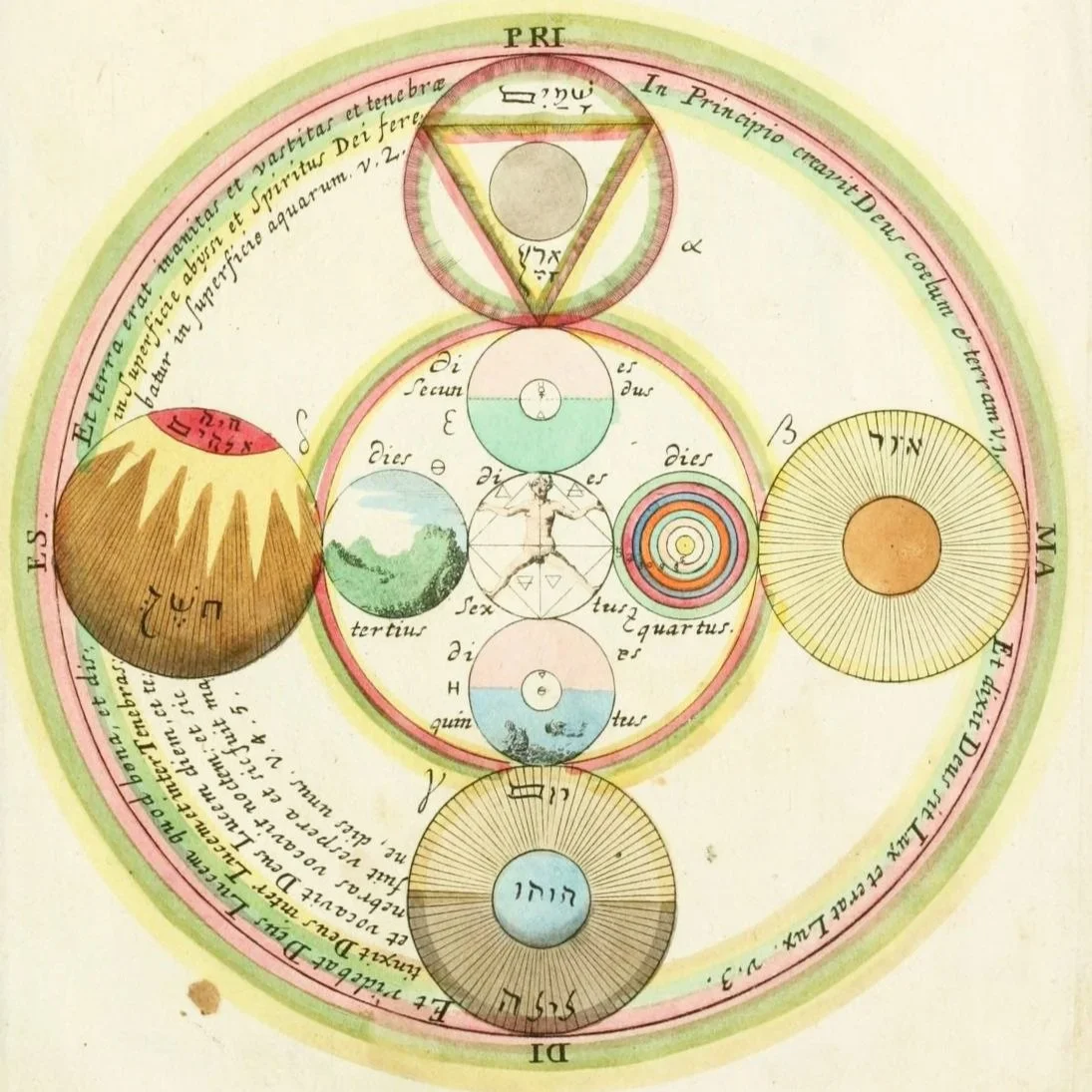
From Opus Mago-Cabalisticum et Theologicum, 1719 - Georg von Welling
Colour as movement, colour as being
In the vision of Liane Collot d’Herbois, colour likewise becomes a living movement between light and darkness, with artistic and therapeutic possibilities. Rather than treating colours simply as symbols or fixed energies, we can learn to observe their gestures, their relationships and the qualities they bring into perception. The mystery of colour is not exhausted by explanation; it invites us to encounter its transformative potential through the act of seeing.
These approaches do not form a simple progression in which one theory makes all the others obsolete. Each opens a different way of understanding colour.
For Color & Cosmos, they meet in a common question:
What changes when we stop treating colour merely as a property of objects and begin to encounter it as a living phenomenon?
Light, considered on its own, is not perceived in the same way as a coloured surface.
Darkness, too, is more than the simple absence of illumination. In the artistic approaches of Goethe, Steiner and Collot d’Herbois, the relationship between light and darkness offers a way to explore how colour appears and changes.
Some colours seem to open, expand and approach the light. Others gather, deepen and draw the gaze inward. Some appear to advance into space; others seem to recede.
Even when colour appears motionless on a painted surface, its relationship with the surrounding colours, the light and the observer remains active.
We can therefore ask of a colour:
How does it move?
Where does it seem to come from?
Does it expand or gather?
Does it approach the light, or acquire depth through darkness?
These questions do not assign a predetermined meaning to colour. They invite us to distinguish what we actually perceive from what we already know or expect.
A red may appear warm or cool, near or distant, heavy or light. It may form a compact surface, or seem to move through space. Its character emerges through the relationship in which we encounter it.
Perhaps this is what it means to speak of the being of colour.
Not to define it once and for all, but to recognise that it possesses a gesture, a quality and a way of appearing that cannot be reduced to its name.
Colour becomes an encounter.
And learning to see it becomes a way of entering into a more attentive relationship with the world.
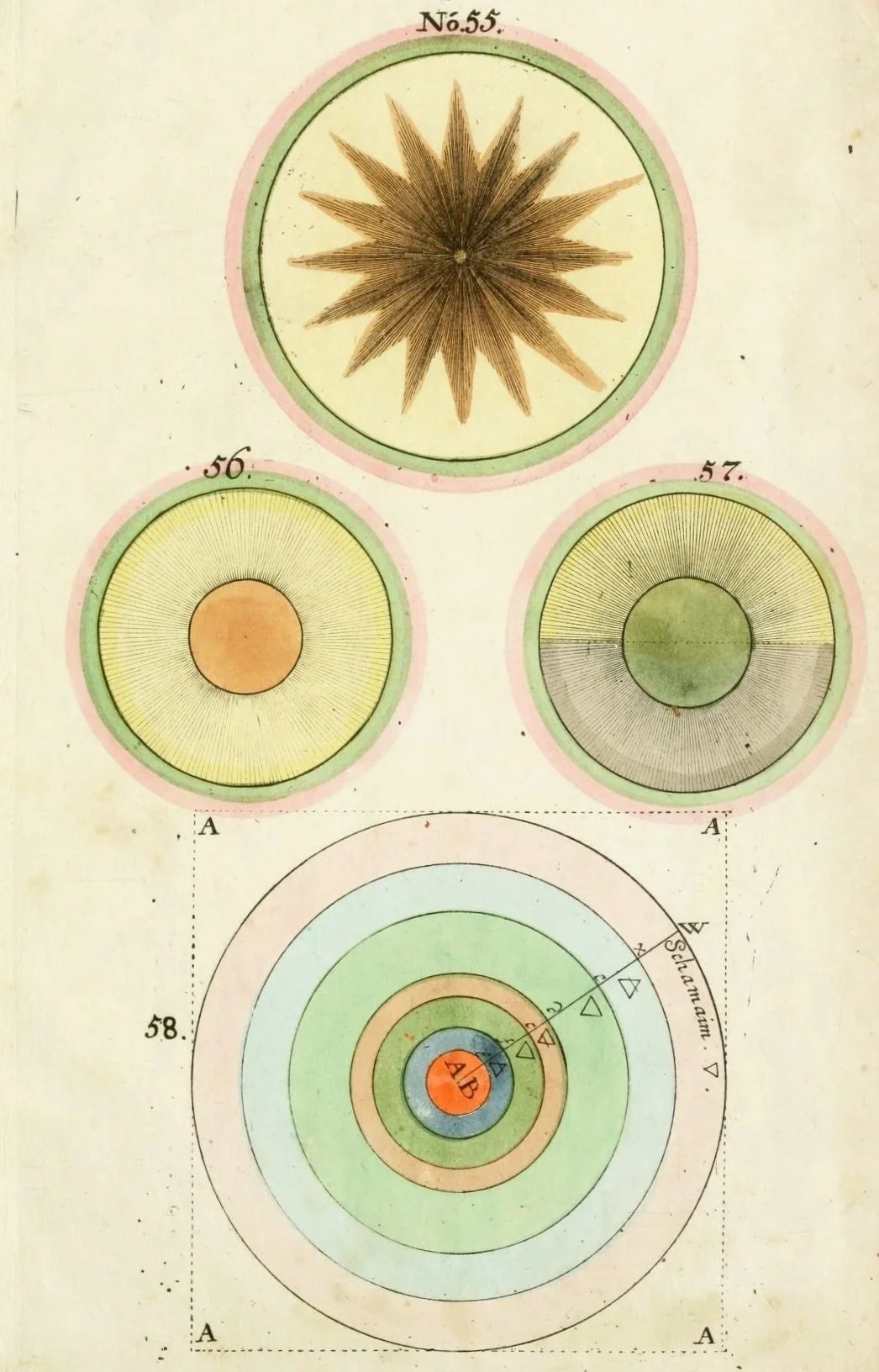
From Opus Mago-Cabalisticum et Theologicum, 1719 - Georg von Welling