Blue Madonna
In the history of art, blue is never just a color. It is a destiny, a symbol, a language of the spirit.
Starting in the 13th century, the Church decreed that the mantle of the Virgin Mary should be painted in blue: the most precious pigment ever used, created from lapis lazuli, a mineral rarer than gold.
From that moment on, mosaics, icons, frescoes, and stained-glass windows began to clothe her in this deep, sacred blue: luminous, celestial, and vast as the sky itself.
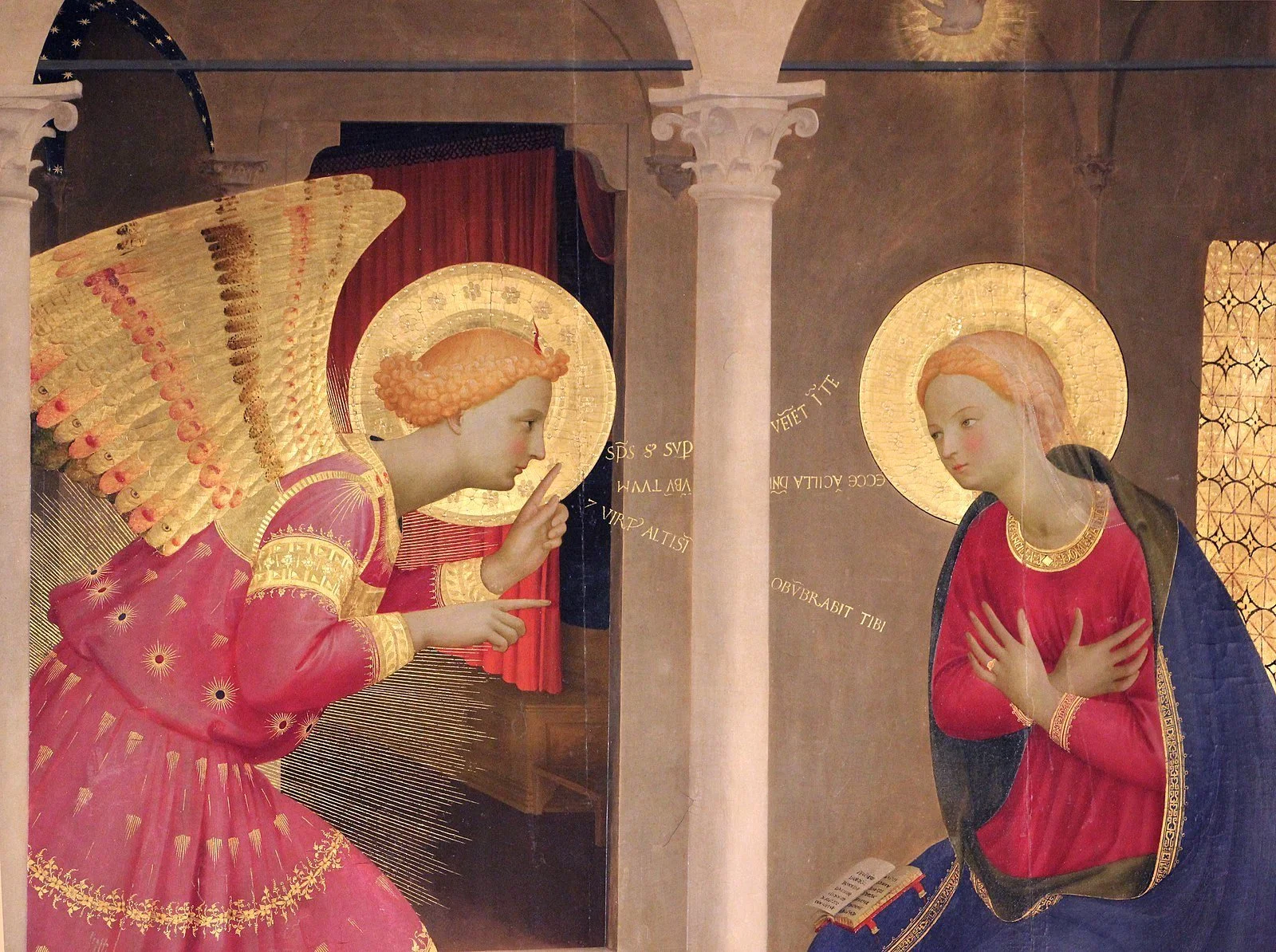
Beato Angelico, Annunciation of Cortona, 1434–36
Yet it was not always so.
For eleven centuries, before Marian devotion blossomed into a central force in Christian imagery, blue was almost absent from liturgy and sacred art. The Madonna’s mantle was traditionally red — the color of Christ’s blood, sacrifice, and divine love.
Only with the late Middle Ages, Gothic art, and the dawn of the Renaissance did blue become the color of celestial purity, cosmic motherhood, and the mystery that bridges earth and heaven.
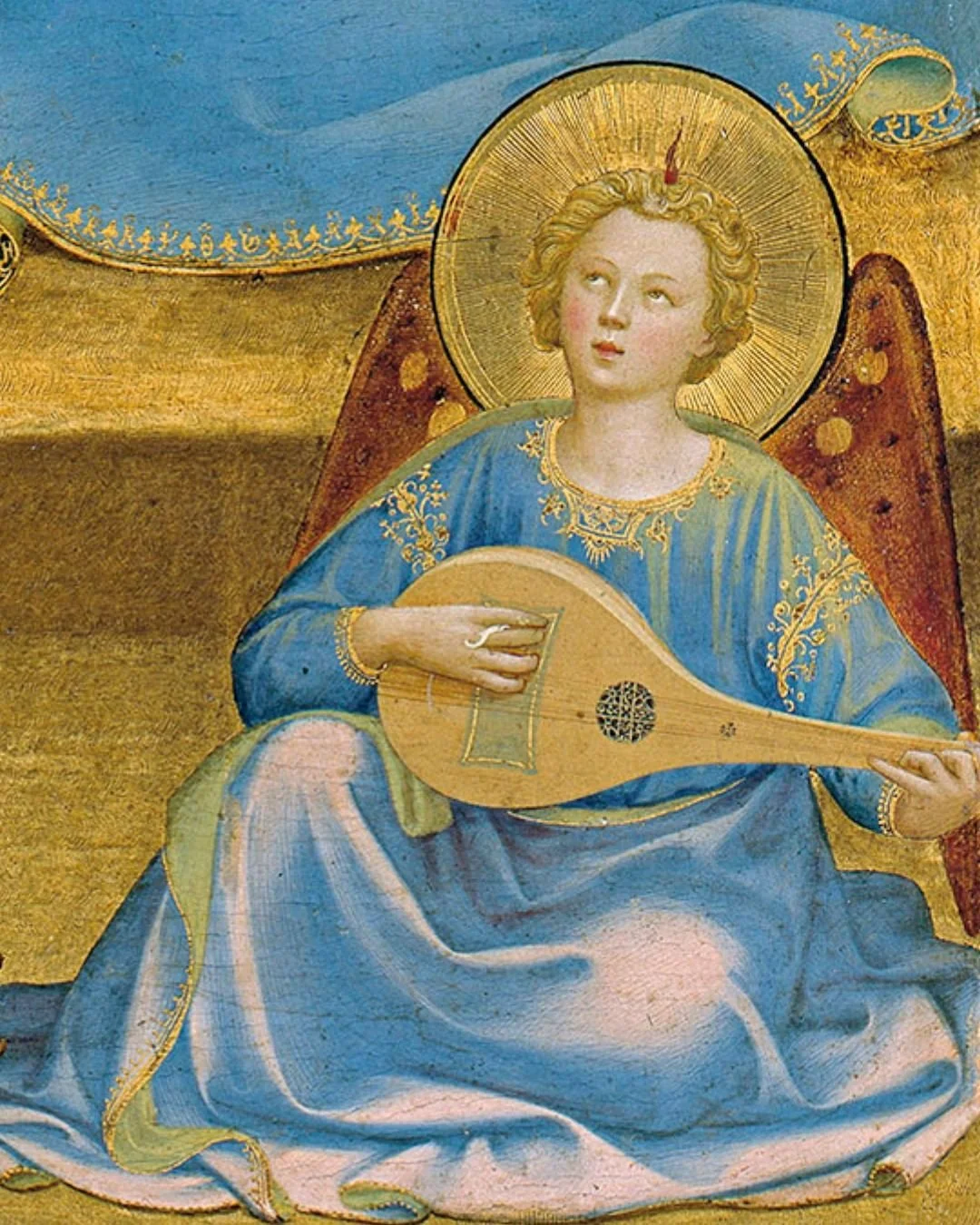
When we gaze at the Madonnas of Fra Angelico, we feel that the blue of their mantles is not mere pigment, but spiritual light: an invitation to stillness, contemplation, and trust.
A color that protects, enfolds and consoles.
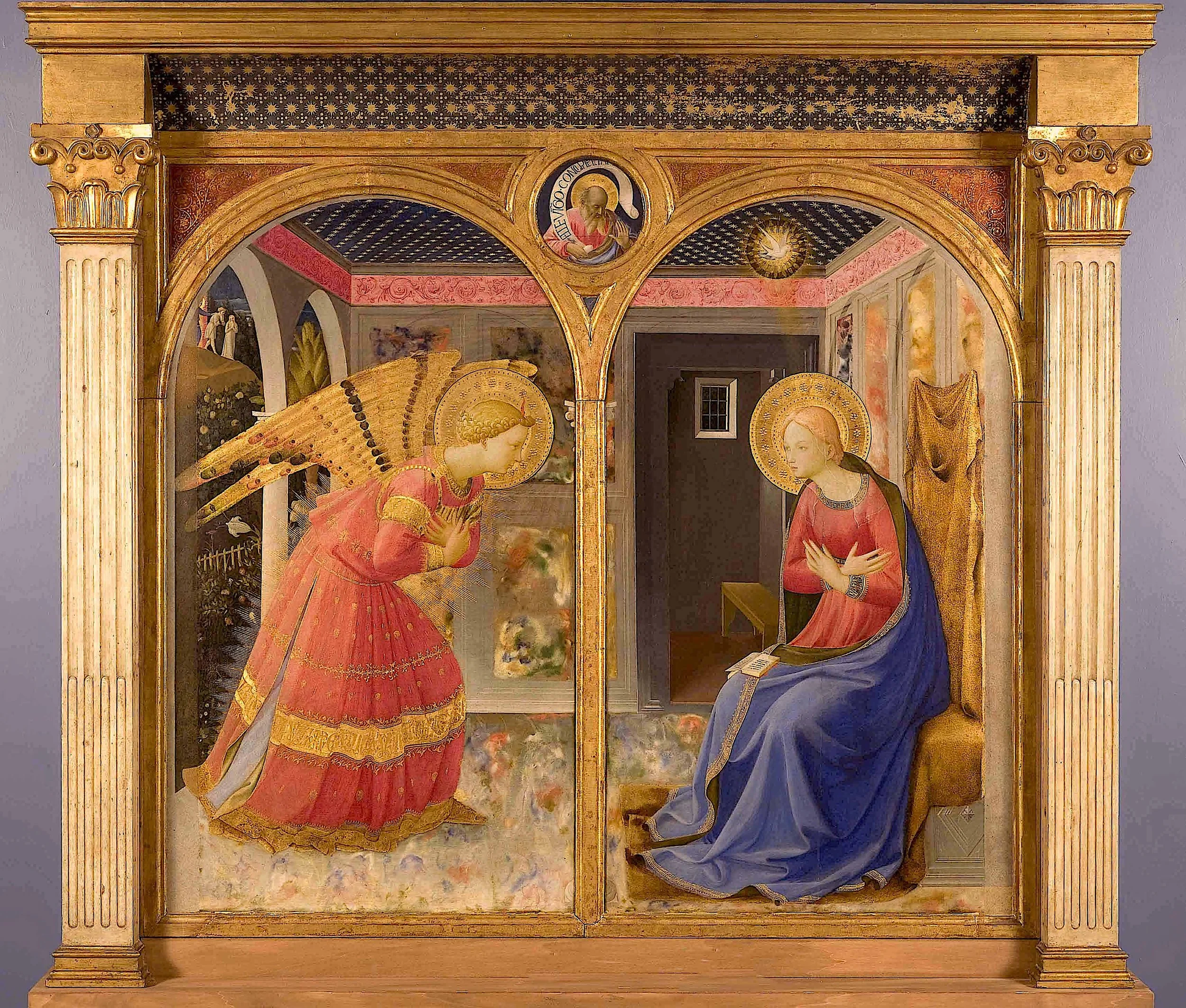
Beato Angelico Annunciation of San Giovanni Valdarno 1430–1432
A Spiritual Statement
In the Renaissance, the blue of Mary’s mantle was not an aesthetic preference but a spiritual declaration.
It was the color of the heavens, of the infinite, of the cosmic dignity of Mary.
Different blues held different meanings:
Azurite: earthly mineral blue, denser and more human
Indigo: obtained by plants, threshold color, a flash of intuition
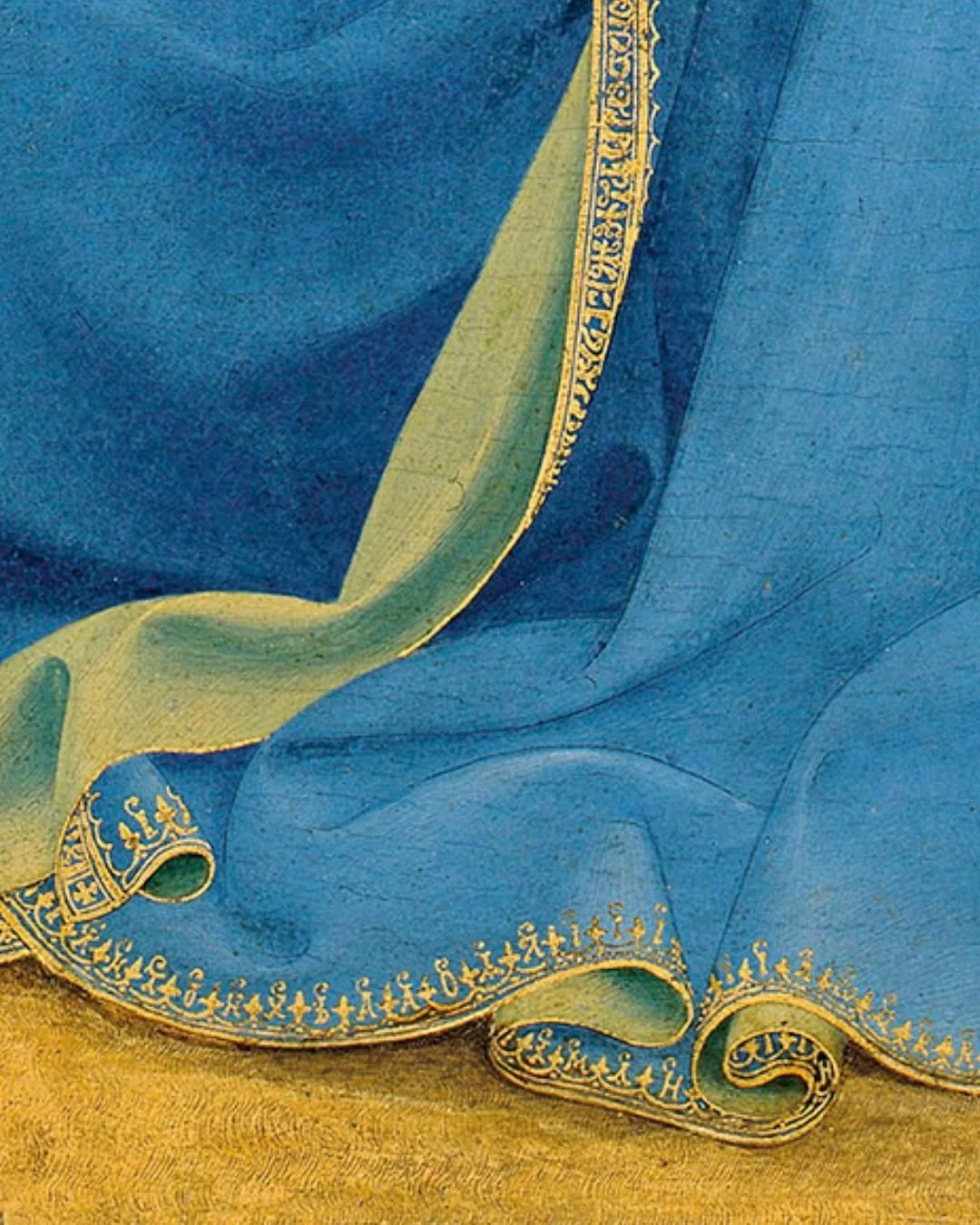
Ultramarine (Lapis Lazuli) Renaissance divine blue: deeply celestial, transcendent, bridge between cosmos and earth
To contemplate these mantles was an act of devotion: to observe them it is visual therapy.
Blue calms, harmonizes, purifies, and leads the soul toward its quiet, luminous center.
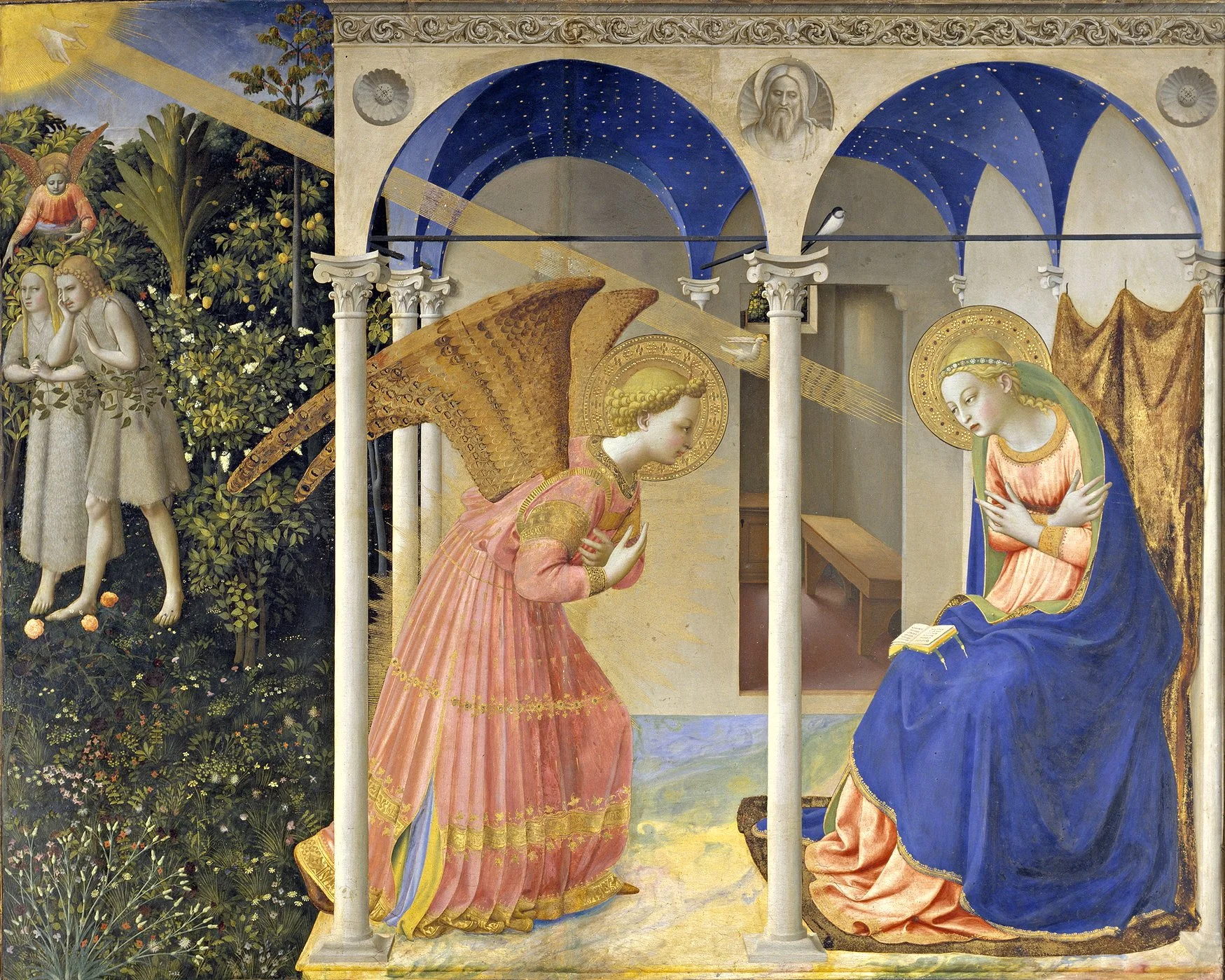
Beato Angelico Annunciazione 1435
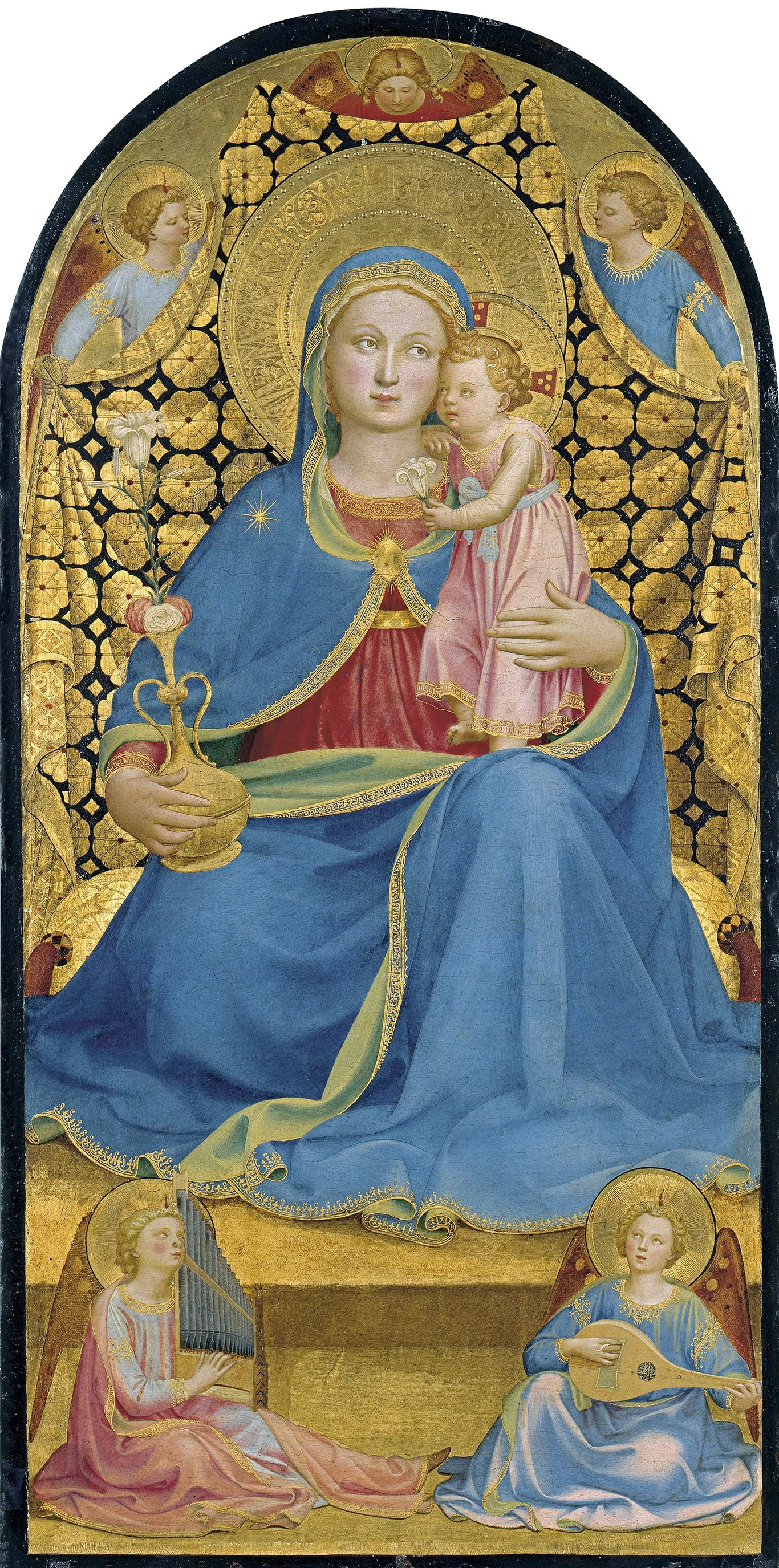
Fra Angelico:
Painter of Light, Monk of Color.
Miniaturist, contemplative, man of prayer,
Fra Angelico painted as if each brushstroke were meditation.
In the silence of the convent, preparing pigments was already an act of devotion. His art turns matter into light.
In his works, blue does not lie heavy on the surface. It breathes. It illuminates. It reveals.
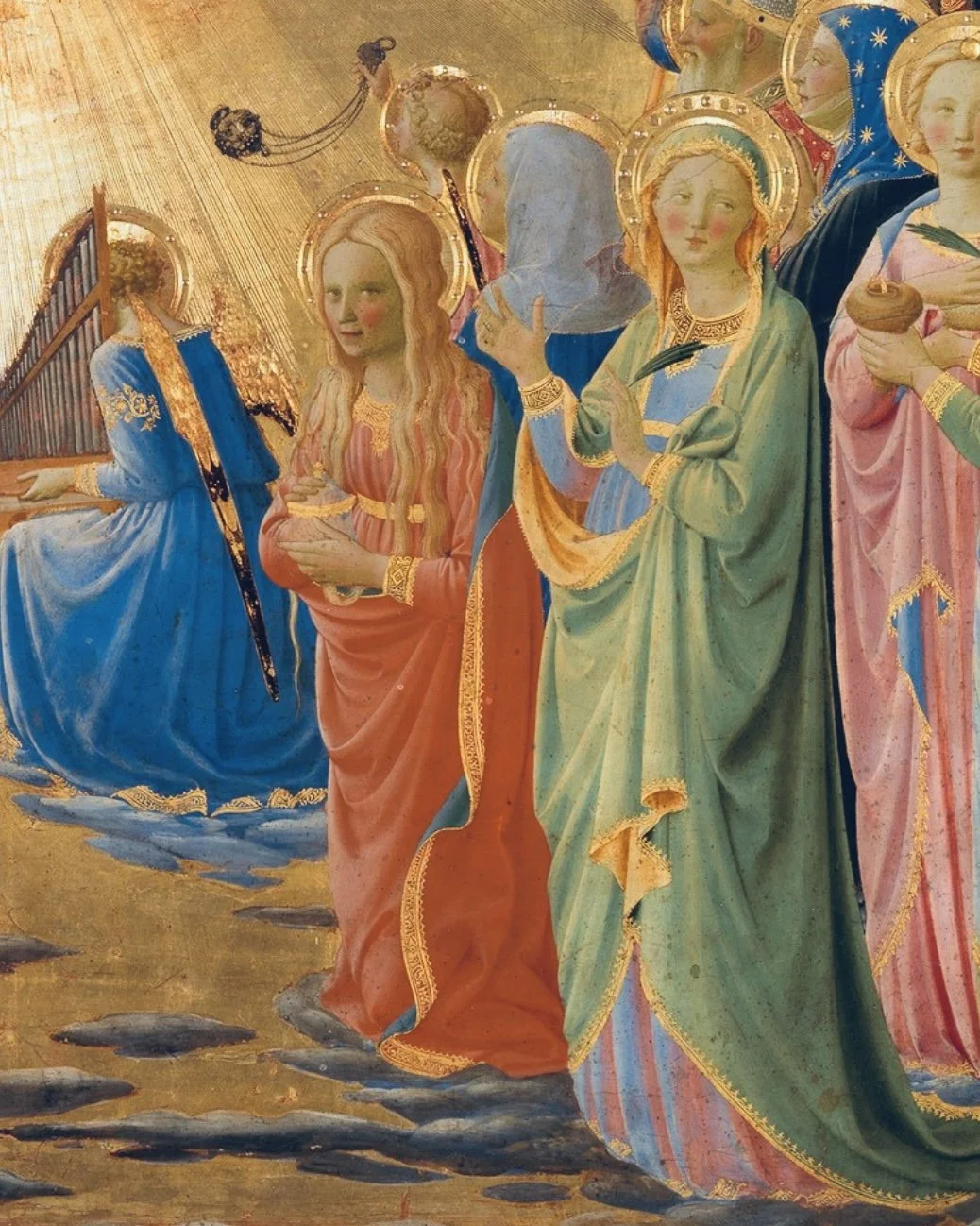
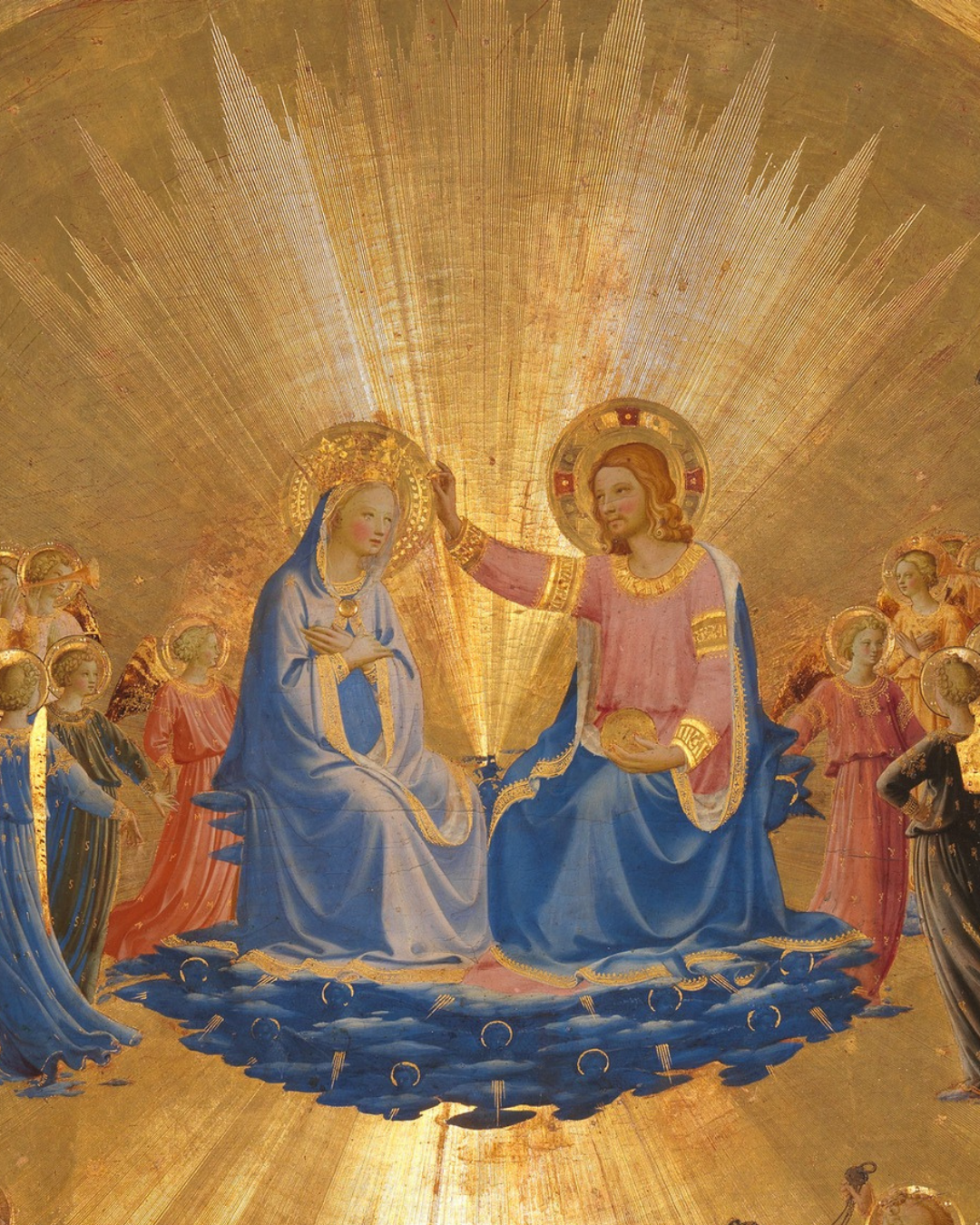
He knew the gold of revelation and the blue of inner peace, the purity of faces, the harmony of architecture.
Each painting is a sanctuary where the eye may rest and the soul may breathe.
To contemplate an Angelico is not merely to “look” it is to enter a therapeutic stillness.
Renaissance art acts as medicine for the soul: an aesthetic experience essential to spiritual hygiene.

Immaculate Conception: The Mystery of Origin
The Feast of the Immaculate Conception is not a theological abstraction but a celebration of pure origin of the luminous womb that receives the divine.
Mary is the image of the human soul at its purest capable of listening, of receiving, of becoming sacred space so that the best within us may be born:
the clearest thought
the purest feeling
the most luminous will
Her “yes” to the light is mirrored in the blue mantle: the visible symbol of a mystery that lives within every human being.
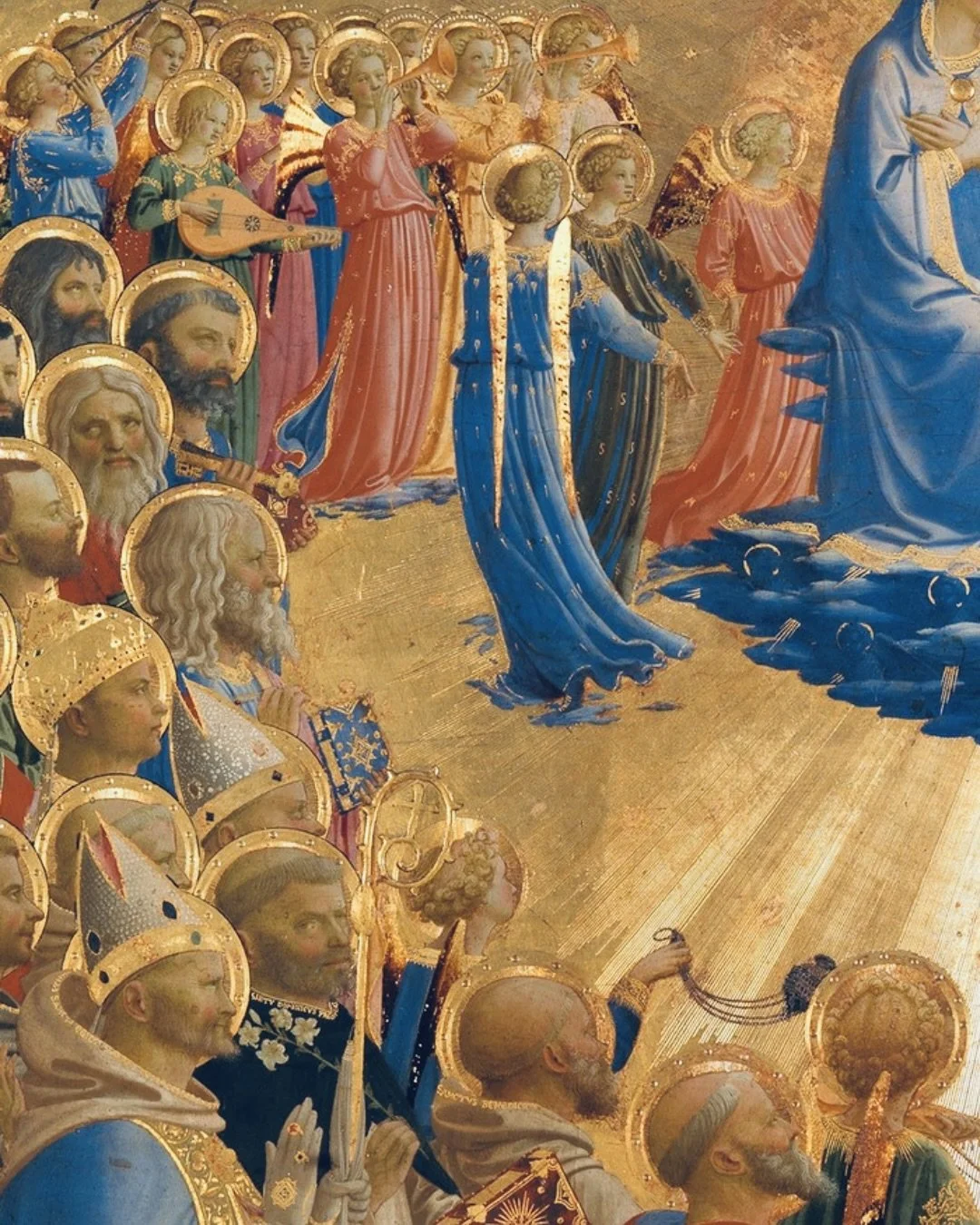
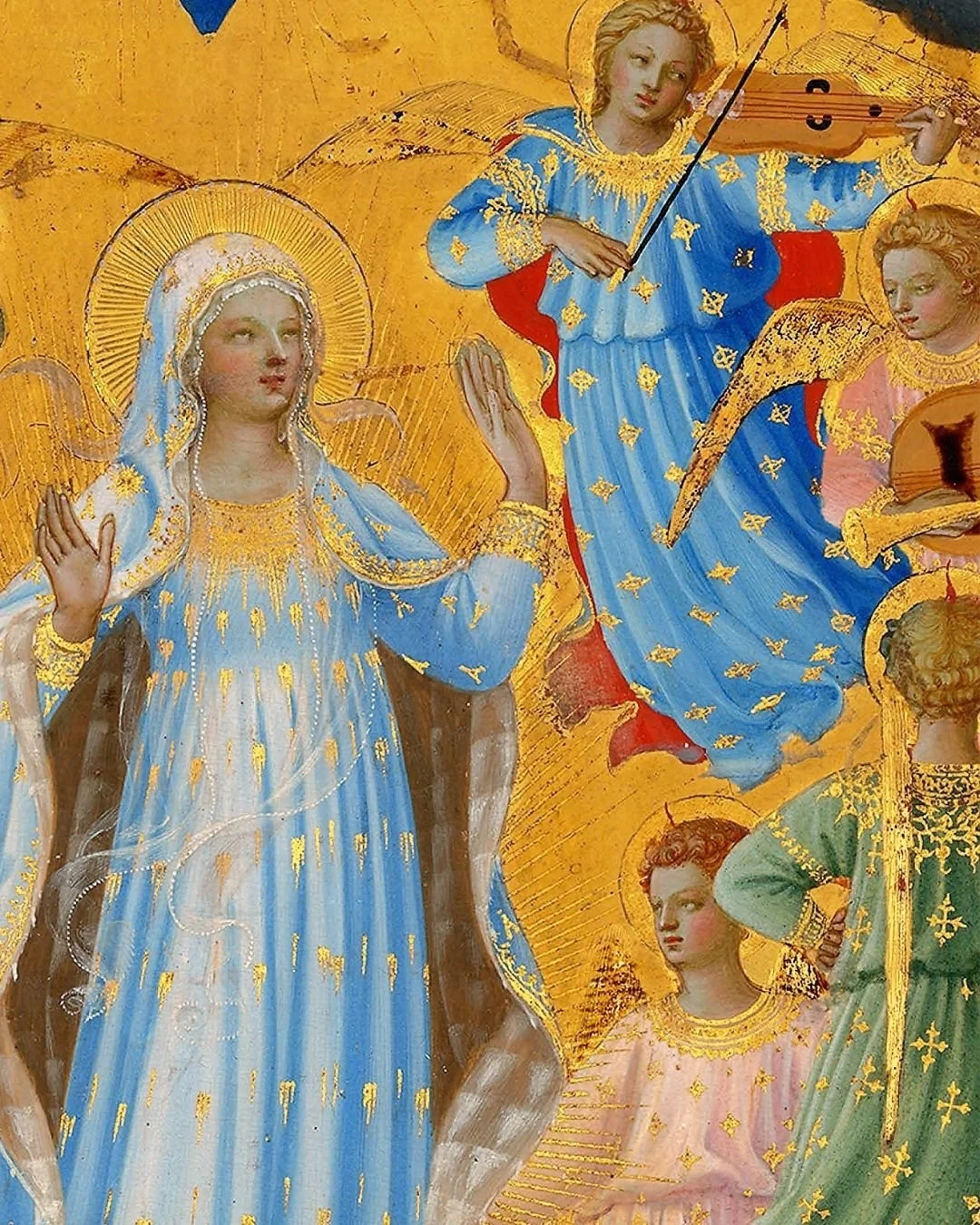
Color as Healing
To stand before a blue mantle painted by Angelico is already a therapeutic practice:
it soothes the optic nerve
reduces anxiety
deepens the breath
restores inner quiet
Color is pigment in the artist’s hand and it is also force, vibration, moral presence.
It can transform the human soul.
Blue becomes the “color of listening.” Renaissance blue becomes an invitation to return to oneself.
A reminder that the path to inner light often begins with a single, sacred shade of blue.
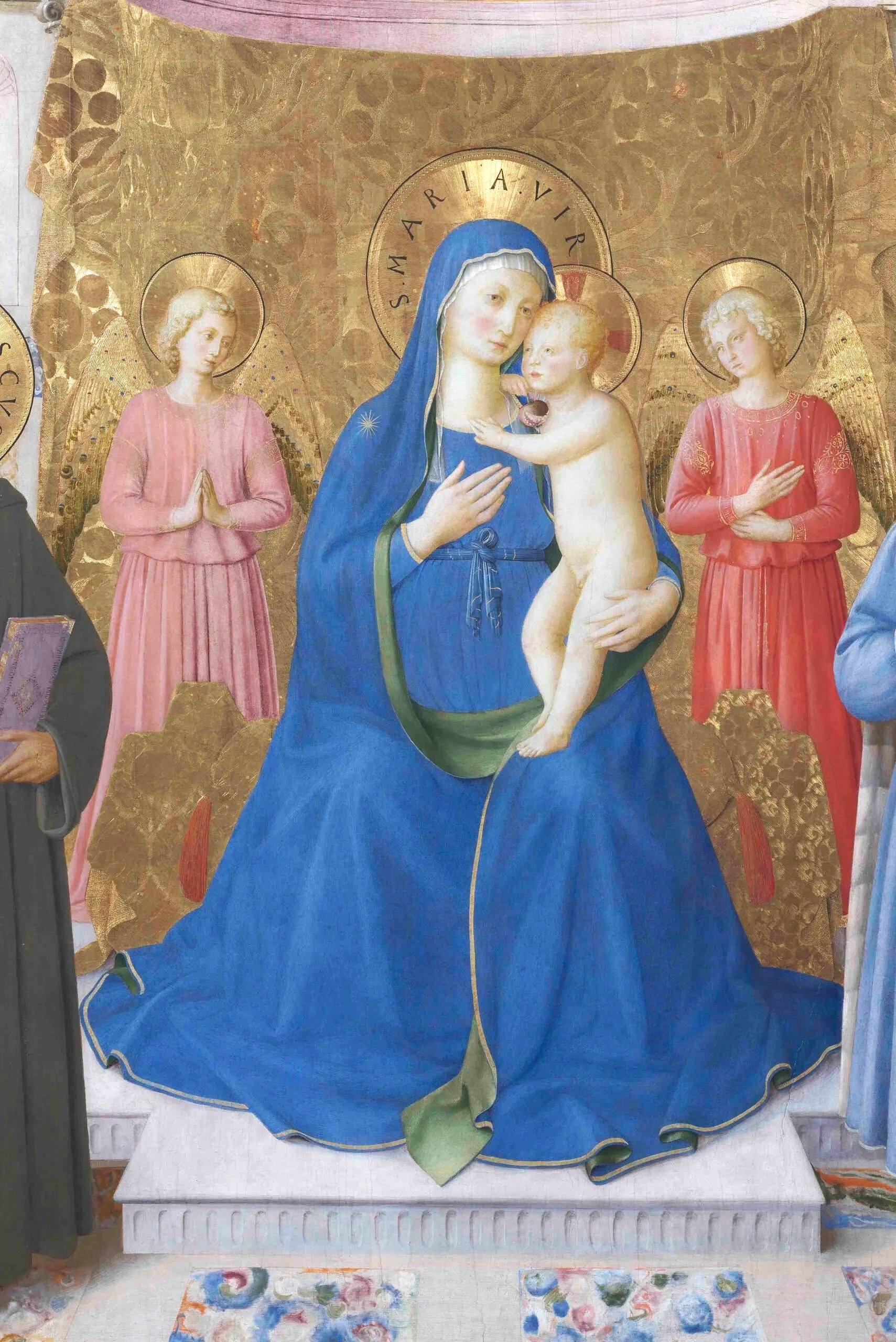
Guido di Pietro (Vicchio di Mugello, c. 1395 – Roma 1455), poi Fra’ Giovanni, detto il Beato Angelico: “Pala di Bosco ai Frati”