The Days of the Blackbird
At the close of January, between January 29th and 31st (or in some traditions, January 30th–February 1st), Italian folk culture celebrates the Days of the Blackbird (i giorni della merla), considered the coldest days of the year.
These days act like a hinge between the deep stillness of winter and the subtle anticipation of spring.
Before modern forecasts, farmers and villagers listened to wind and watched the sky with reverence, reading seasonal rhythms as one reads a poem. Weather proverbs carried meaning not merely for rain or shine, but for the soul’s alignment with nature’s breath and pulse.
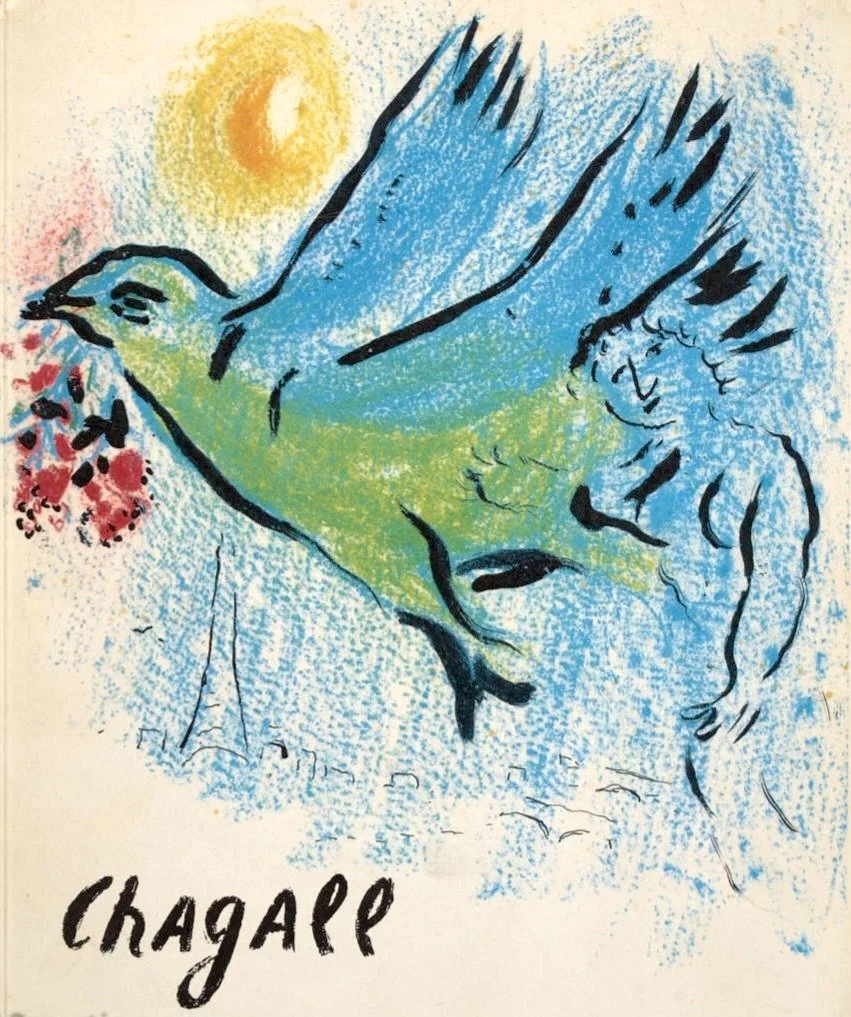
Marc Chagall - Bird Chase - Litogrphy
The Legend of the Blackbird
A beautiful folk tale accompanies these days:
Once upon a winter, blackbirds were pure white like snow. One blackbird, tired of January’s mischief, frost and snowstorms, prepared to outlast the month. She hid through the 28 days of January, believing she had outsmarted the season.
But January, in his pride, borrowed three days from February and unleashed harsh cold upon the world. The blackbird, surprised, sought refuge in a chimney and warmed herself in the rising smoke.
When at last she emerged, she was safe — but her feathers were turned dark by the soot. From that day forward, blackbirds were born black, and those bitter freeze days became known as the Days of the Blackbird.
This story shy, weathered, human, teaches humility: not to sing too soon, not to assume victory over winter until it has fully passed.
Dante’s Blackbird
Dante, in Purgatorio, famously likens human folly to a blackbird who sings at the first hint of fair weather:
“Like the blackbird who sings at the first calm spell…”
This image becomes a poetic mirror of our own haste to celebrate spring too soon, of our wish to believe the journey is complete before it truly is.
Chagall, Birds & the Poetic Soul
While the Blackbird lore belongs to folk culture, its symbolic life resonates with the world of modern art — especially in the work of Marc Chagall, currently on show “Chagall, Witness of His Time” at the Palazzo dei Diamanti in Ferrara .
In this major exhibition of around 200 paintings, drawings, and engravings, Chagall’s universe unfolds as a dreamlike landscape where animals, birds, lovers, and floating forms move between earth and sky. His art, poetic, symbolic, humane, reveals how animals become messengers of inner life, carriers of memory, and symbols of longing and hope.
Like the folk tale of the blackbird, Chagall’s imagery reminds us that the soul’s journey is neither literal nor linear, it is imaginative, paradoxical, and ever connected to color, nature, and metaphor. His floating figures and talking animals become bridges between the visible and the unseen, between what we feel and what we cannot yet articulate.
Marc Chagall - Romeo and Juliette lithograph - 1964
The Days of the Blackbird as a Seasonal Ritual
These cold days offer an invitation:
to slow down, to observe, to dwell in inside and outside winter without rushing to the promise of spring.
We can
Light a candle at midday and observe its glow — a small sun in cold weather.
Sit by a window and watch winter birds quietly go about their days.
Breath consciously with the rhythm of the cold air: long, slow, attentive.
Marc Chagall - Chasing the Blue Bird - 1969
Make a Wool Blackbird
An easy seasonal craft that captures the spirit of this tradition.
You’ll need:
✴ spare wool strings
✴ scissors
✴ a small felt triangle for a beak
How:
Fold a bundle of wool about the length of your palm, in half so the loops hang down like a little tail.
Tie just below the fold with a piece of string to create a “head” and neck.
Separate the strands below the tie: one side becomes the tail, the other the body.
Trim gently the bottom of the strands so the bird’s body looks even.
Add a beak by tying a tiny felt or paper triangle at the head.
Optionally, add a short piece of string on top to hang your bird near a window as a sign of winter’s end and approaching spring.
This simple animal embodies the spirit of tale and season, waiting, survival, transformation.